The Complete Guide to Conformal Coating Application for Reliable Electronics
Conformal coating plays a critical role in modern electronics manufacturing. As electronic assemblies become smaller, more powerful, and increasingly exposed to harsh operating environments, protecting printed circuit boards (PCBs) is no longer optional, it is essential.
Moisture, condensation, salt mist, dust, chemicals, vibration, and thermal cycling can all compromise electronic reliability. A properly selected and correctly applied conformal coating forms a thin, protective polymer layer that “conforms” to the contours of the PCB, shielding components and conductive traces from environmental attack.
However, selecting the right coating is only half the equation. The true differentiator between long-term reliability and early failure is how the coating is applied. Inconsistent thickness, poor surface preparation, incomplete coverage, or incorrect curing can undermine even the highest-performance materials.
This comprehensive guide explores conformal coating application in depth - giving you the insight needed to choose the most reliable and scalable coating process for your project.
Why Application Matters as Much as Material
Manufacturers often focus heavily on whether to use acrylic, silicone, polyurethane, epoxy, or parylene coatings. While chemistry matters, application quality ultimately determines performance.
Improper application can result in:
- Voids and pinholes that allow moisture ingress
- Delamination due to poor adhesion
- Excess thickness causing stress on components
- Insufficient edge coverage on leads and solder joints
- Contamination trapped beneath the coating
In high-reliability industries such as aerospace, military, automotive and medical devices, coating defects can lead to corrosion, dendritic growth, short circuits, and ultimately, system failure.
The goal should not simply be to apply coating – it should be to apply it consistently, predictably, and in a controlled manner that aligns with your product’s environmental requirements and service life expectations.
Designing for Conformal Coating
The most effective conformal coating applications begin at the PCB design stage. Waiting until production to consider coating frequently leads to excessive masking and increased labour costs.
Design best practices include:
- Clearly defining keep-out areas for connectors, test points, and mechanical interfaces
- Grouping coated regions where possible
- Avoiding tall component placement that creates shadowing
- Minimising deep cavities that trap coating unless full immersion methods are planned
- Including tooling holes for selective coating systems
In short, design for coating reduces application complexity and improves repeatability. That’s not to say that we settle for any less quality if conformal coating is an afterthought (as it quite often is) – but considering coating early in the design phase often leads to more efficient processes.
Surface Preparation: The Foundation of Adhesion
Surface preparation is one of the most underestimated factors in conformal coating success.
Before application, PCBs must be thoroughly cleaned to remove:
- Flux residues
- Soldering byproducts
- Oils and handling contamination
- Dust and particulates
Cleaning may involve solvent materials or aqueous wash processes depending on assembly type. After cleaning, boards must be completely dried to eliminate residual moisture, particularly under components.
Where required, gelling and masking follows cleaning. Connectors, switches, heatsinks, and areas requiring electrical contact must be protected using peelable liquid/ gel and masking tapes.
Proper preparation dramatically reduces coating failures and improves long-term durability.
Application Methods Overview
There is no universal “best” method of conformal coating application. The correct choice depends on production volume, board complexity, required coverage, rework expectations, and budget constraints.
The primary application methods include:
- Manual spray coating
- Automated spray or selective robotic coating
- Dip coating
- Brush coating
- Aerosol application
Each method carries distinct advantages and trade-offs, which are explored in detail below.
Spray Coating
Spray coating is one of the most common application methods in electronics manufacturing.
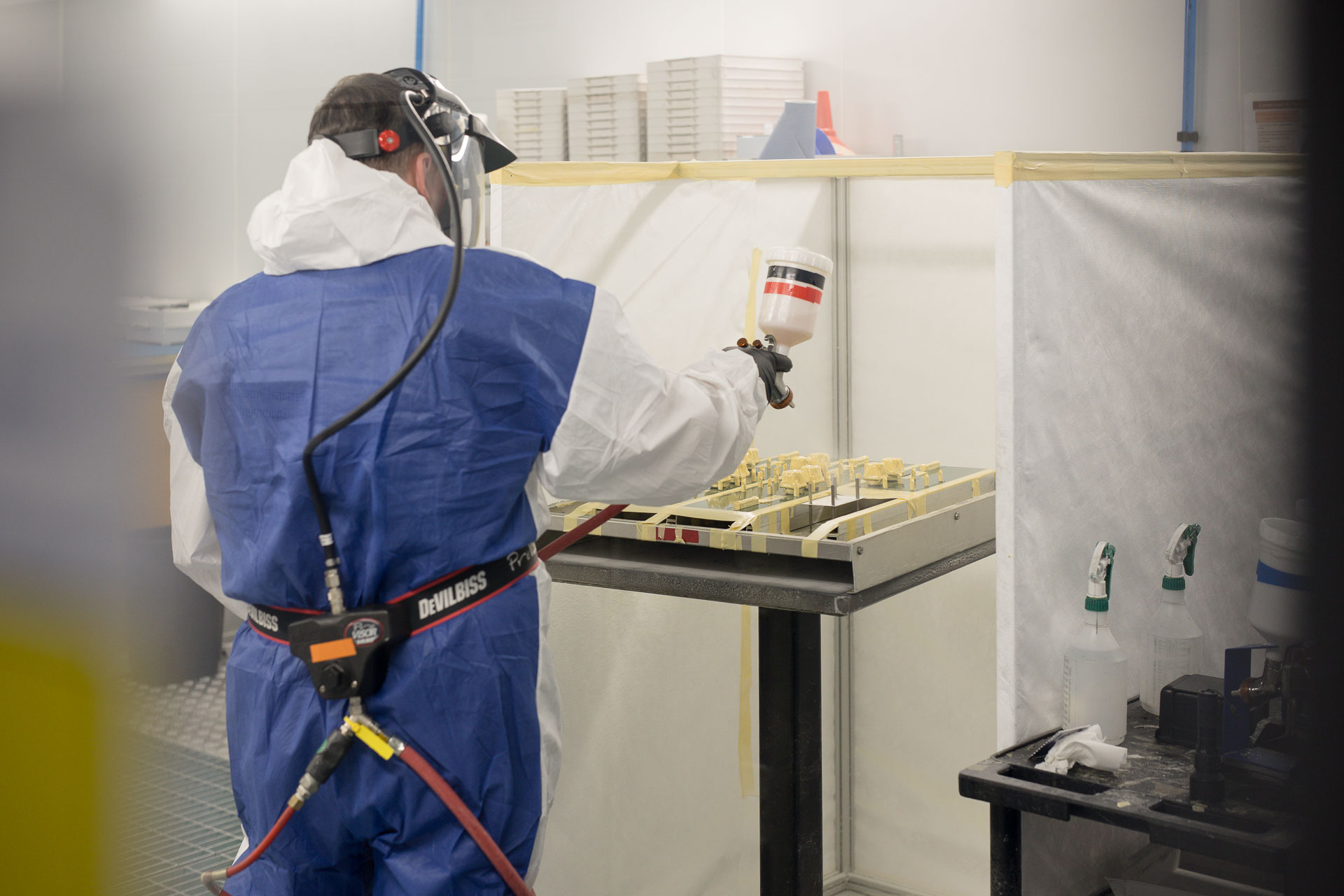
In manual spray coating processes, a trained operator applies the conformal coating using a spray gun to achieve a controlled, uniform film across the PCB surface. The coating is atomised into a fine mist as it exits the nozzle, enabling even distribution over components. Atomisation (coating consistency) is influenced by several adjustable parameters, including air pressure, nozzle type, fluid flow rate, material viscosity and spray fan pattern. By carefully controlling these variables, operators can optimise droplet size, minimise overspray, and achieve the desired wet film thickness without runs, pooling, or excessive edge build-up. Best practice involves maintaining consistent nozzle distance, using multiple thin passes instead of heavy coats, and rotating boards to ensure even coverage.
Advantages:
- Creates an even film build when applied correctly
- Scalable from low to medium-high volumes
- Flexible for various board geometries
Challenges:
- Operator variability
- Requires skilled spraying personnel
- Requires masking of keep-out areas
Selective Coating
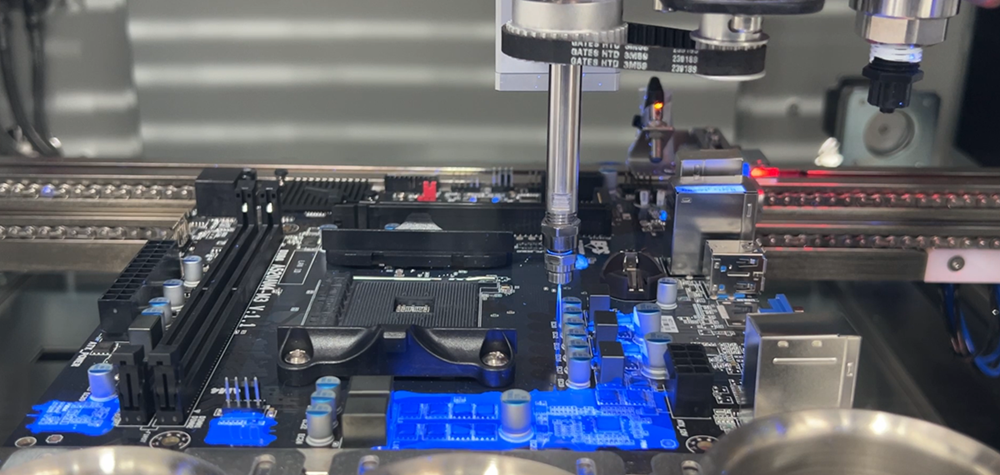
Selective coating uses programmable equipment to apply conformal coating precisely where it is required, eliminating the need for extensive masking. Unlike manual spray processes, selective systems are computer-controlled and utilise precision dispensing valves or atomised spray heads mounted on multi-axis platforms. The PCB remains stationary or moves along a conveyor while the coating head follows a pre-programmed path, applying material only to designated areas.
These systems allow tight control over dispense rate, traverse speed, atomisation pressure, nozzle height, and pattern width. By carefully calibrating these variables, manufacturers can achieve consistent film thickness, accurate edge definition, and repeatable coverage across high production volumes. Selective coating is particularly advantageous for complex PCB assemblies with numerous keep-out areas (such as connectors, test points, and mechanical interfaces) as it significantly reduces manual masking, material waste, and process variability.
Advantages:
• No requirement for masking
• High precision and repeatability
• Reduced material waste
• Ideal for high-volume production
Challenges:
• Higher capital investment if buying the equipment yourself
• Requires programming expertise
• Limited penetration under certain components
Dip Coating
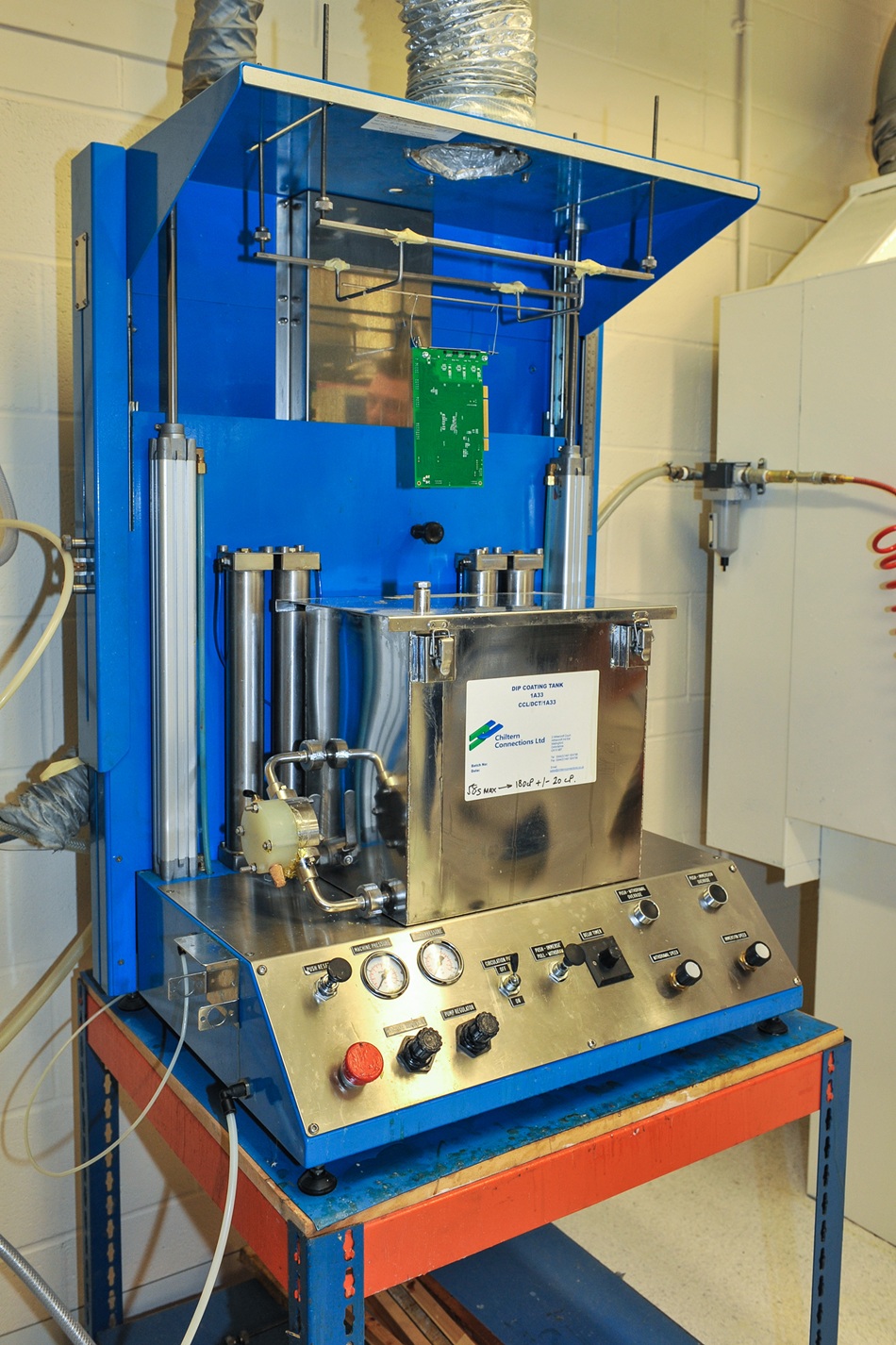
Dip coating is an immersion application method in which the PCB assembly is submerged (either wholly or partially) into a reservoir of conformal coating material and then withdrawn at a controlled, predetermined rate. As the board is immersed, the coating penetrates around components, beneath leads, and into complex geometries, providing comprehensive wrap-around coverage. The final film thickness is largely governed by material viscosity, withdrawal speed, ambient temperature, and solvent evaporation rate.
Careful control of these process variables is essential to achieving uniform coverage without excessive pooling, bridging, or wicking into unintended areas. Dip coating is especially well suited to assemblies requiring complete protection across dense or three-dimensional layouts with little to no ‘keep out’ areas.
Advantages:
- Excellent wrap-around coverage
- Penetration under components
- Efficient for batch processing
Challenges:
- Only suitable if complete areas are OK to be coated
- Risk of coating wicking into connectors
- Higher material consumption
Brush Coating and Rework
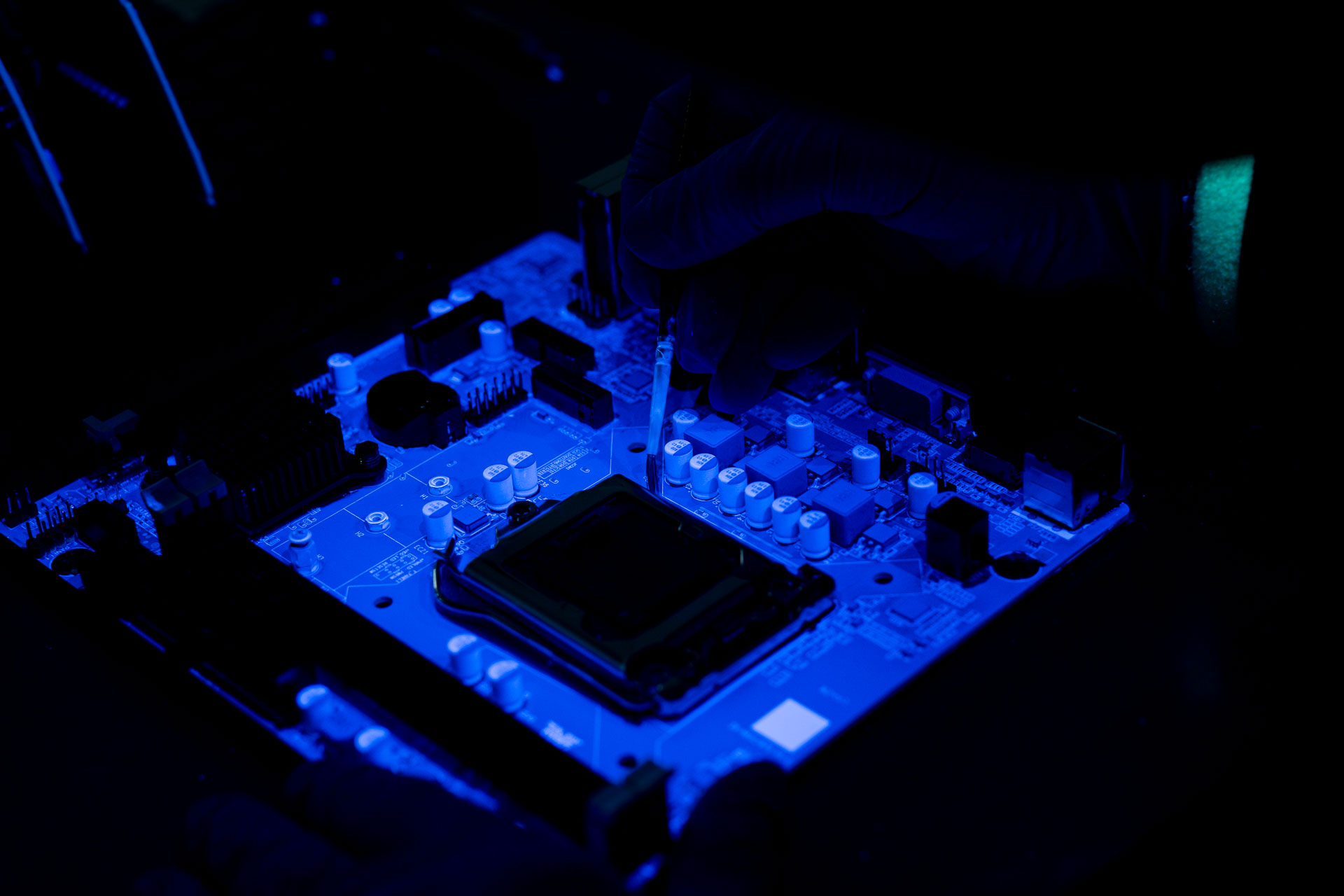
Hand brushing is a manual conformal coating application method typically used for prototyping, very small boards, touching in, or localised rework. In this process, an operator applies the coating directly to the PCB surface using a suitable brush, carefully distributing the material to achieve required coverage. While simple in concept, successful brush application requires control of material viscosity, loading technique and stroke consistency to avoid uneven coating.
Because brushing relies heavily on operator technique, achieving uniform thickness can be more challenging than with automated methods. Excessive material loading may result in pooling, brush marks, or trapped air bubbles, while insufficient application can lead to thin spots and incomplete edge coverage.
Advantages:
- Minimal equipment investment
- Ideal for touch-up work
- Can get into small spaces and close to ‘no go’ zones
Challenges:
- Operator-dependent consistency
- Higher risk of uneven thickness
- Time consuming
Aerosol Application
Aerosol application is a convenient and accessible method of applying conformal coating, typically used for prototyping, small production batches, field servicing, or repair work. In this process, the coating material is supplied in a pre-packaged pressurised can, allowing the operator to dispense the coating directly onto the PCB surface without the need for additional spray equipment. The material is atomised as it exits the nozzle, forming a spray pattern designed to provide relatively even coverage across components and exposed circuitry.
Film formation is influenced by factors such as spray distance, nozzle condition, ambient temperature, humidity, and the speed and consistency of the operator’s hand movement. Because aerosol systems are not connected to adjustable air pressure or fluid flow controls (as found in professional spray equipment), droplet size and spray pattern are less precisely regulated. This can make achieving highly controlled film thickness more challenging.
Aerosol application can deliver acceptable protection when used carefully for maintenance, rework, or very low-volume assembly. However, it lacks the repeatability and process control required for scalable manufacturing environments. As a result, it is generally considered a supplementary method rather than a primary production solution.
Advantages:
- Low equipment cost (but it is still advisable to have suitable extraction)
- Ideal for field repairs and on-site servicing
- Suitable for material qualification and prototypes
Challenges:
- Limited thickness control
- Lower quality finish
- Operator variability and consistency depends heavily on technique
- Lack of repeatability reduces suitability for regulated industries
Selecting the Right Coating Method with a Trusted Partner
Choosing the appropriate conformal coating method depends on several key factors:
- Production volume – Determines whether manual or automated processes are most efficient.
- Board geometry and size – Complex layouts may require specialised application methods.
- Industry standards – The board’s intended environment and application may dictate the most suitable coating method to ensure consistent performance and quality.
Working with an experienced coating partner can simplify this process. A specialist provider can recommend the optimal application method based on your production needs, while also helping reduce risk and capital expenditure.
When selecting a partner, look for:
- Documented process controls – Ensures consistent quality and repeatability.
- Traceability systems – Tracks materials, processes, and outcomes.
- Industry experience – Familiarity with your product requirements and standards.
- Trial validation runs – Ability to test processes before full-scale production.
- Commitment to quality – Improves yield, reduces rework, and accelerates time-to-market.
A qualified partner not only helps you choose the right coating method but also supports efficient, reliable, and high-quality production.
Conclusion
Conformal coating is far more than a finishing step - it is a critical for safeguarding electronic assemblies operating in challenging environments.
Success depends on a combination of selecting the correct material, surface preparation, application method, and maintaining strict process control and inspection standards.
By approaching conformal coating as a complete system - chemistry, application, curing, and quality assurance - manufacturers can dramatically extend product life, reduce field failures, and enhance customer confidence.